
Key Takeaways
- The FAST scale looks at what someone can do each day, not how they score on a test.
- It covers 7 stages, moving from little change to needing hands-on help.
- Higher stage numbers point to a greater need for daily support.
- Care teams, insurance companies, and families all use it for planning.
- Each stage lines up with different options, from assisted living to memory care.
- Simple notes about daily changes give the care team helpful information.
A Closer Look at Tools That Track Dementia Stages
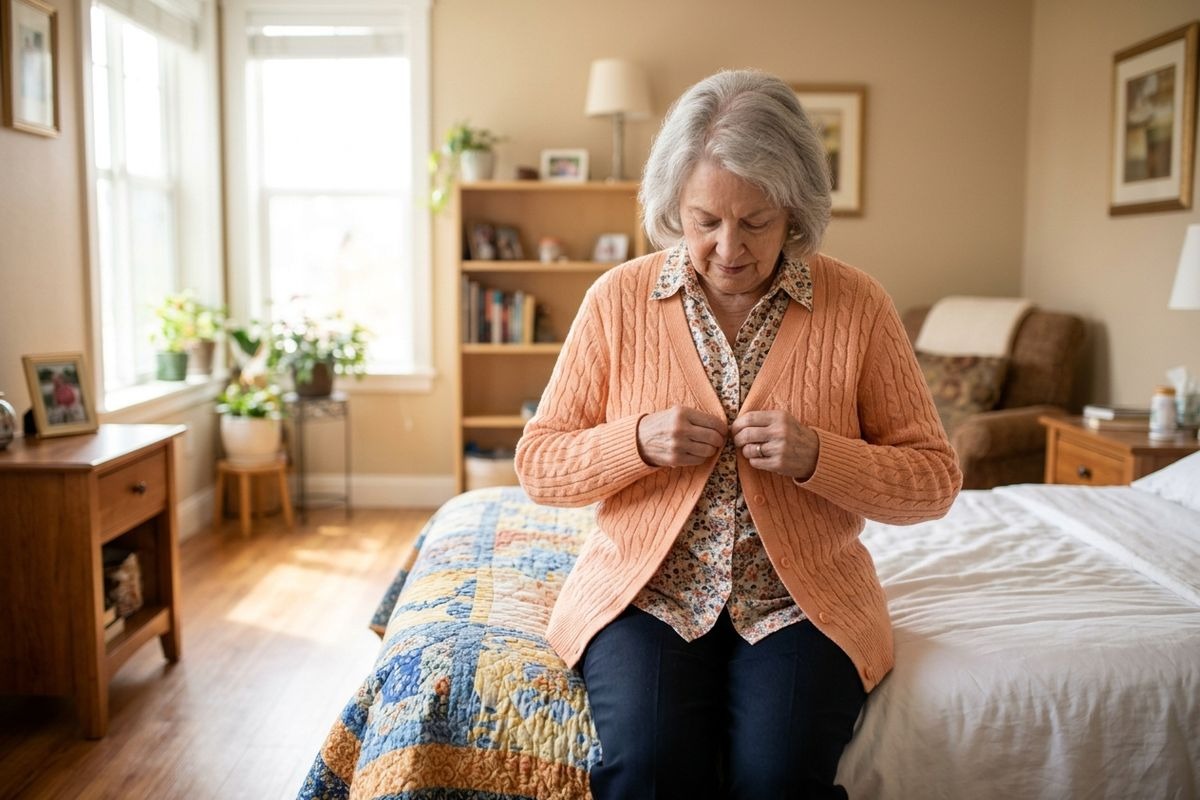
Recently, your loved one’s taking forty minutes to button their blouse when it used to take five. Before that, they were asking you which drawer holds their socks. These everyday moments carry a lot of information. And care teams have a way of organizing them.
The FAST scale, short for Functional Assessment Staging Tool, sorts dementia into seven stages. Stages are determined based on which daily tasks a person can still handle on their own. For caregivers, that’s particularly helpful. You see these moments every day, and the scale gives you the language to describe those moments.
Our team at Frontida Assisted Living of Kimberly understands that it can be difficult seeing someone you love change with dementia. That’s why we dedicate ourselves to helping every family take care of their loved ones with tools like the FAST scale.
What the FAST Scale Measures
First, we must understand what and how the scale measures. Think of things like getting dressed, bathing, eating, and using the bathroom. These are the tasks that shape a day. Changes in activities of daily living tell a clear story about how much support someone needs.
That focus sets it apart from tests that measure recall or problem-solving. Your loved one might have a difficult time with a puzzle, but that doesn’t mean they can’t handle their morning routine. What the FAST scale cares about is the routine.
Who Uses It
Several groups rely on this tool, and each one uses it a little differently.
- Care teams, to match support with current abilities
- Insurance companies, when reviewing coverage decisions
- Families, who want a clearer picture before making plans
- Senior living communities, when discussing what daily help might look like
Nevertheless, it creates a shared language. And having that language helps. When you and the care team both reference the same stage, conversations are more accurate and more efficient.
The 7 Stages of the FAST Scale
The stages move from almost full independence toward more hands-on assistance. Here’s the general shape of it:
- Stages 1 to 2 bring little or no noticeable change in daily abilities.
- Stages 3 to 4 are when complex tasks, like handling bills, get harder.
- Stages 5 to 7 involve more personal, consistent help with daily care and movement.
Stage 1 Substages at a Glance
Stage 1 looks like an ordinary day. Work, errands, conversations, and daily routines all carry on the way they always have. Nothing stands out to family or to a care team at this point, and no help with daily tasks is needed.
Stage 2 Substages at a Glance
In stage 2, your loved one may notice small shifts before anyone else does. Keys turn up in odd places, or a familiar word takes a moment longer to arrive.
These moments often overlap with normal aging. Daily tasks still happen independently, so support usually isn’t part of the picture yet.
Stage 3 Substages at a Glance
Stage 3 is where others may start to notice. Demanding tasks, like organizing a large project or driving somewhere unfamiliar, can take more effort than they once did.
Everyday routines like dressing, bathing, and meals still go smoothly. What tends to help most here is a little extra structure, such as written reminders or a shared calendar.
Stage 4 Substages at a Glance
By stage 4, complex tasks are usually where the difficulty shows up. Think of paying bills, managing a checkbook, planning a family dinner, or handling a big grocery trip.
Personal care generally stays independent. This is often when families begin looking into light daily support, and it’s a good moment to start conversations about what the months ahead might look like.
Stage 5 Substages at a Glance
Stage 5 brings a shift toward more hands-on help, though it’s still fairly specific. Choosing clothing that fits the weather or the occasion often calls for a gentle assist.
Once the outfit is picked out, many people at this stage can still dress themselves, eat, and manage the bathroom on their own. Prompting and a steady routine tend to go a long way here.
Stage 6 Substages at a Glance
Stage 6 is where the scale gets a bit more complex. It covers a stretch of activities, ranging from dressing to toileting. Individuals at stage 6 would typically require assistance with most of these activities.
This is also the stage where personality shifts may show up. These changes may be accompanied by fluctuations in sleep patterns. Despite these shifts, people at this stage can still recognize familiar faces.
Stage 7 Substages at a Glance
In stage 7, speech tends to narrow to just a few words. Walking and sitting up usually need assistance too.
Many caregivers opt for around-the-clock support at this point as their loved one’s needs exceed what they’re able to provide alone.
How to Read Your Loved One’s FAST Score
The FAST scale is easy to read. A higher number means more support is needed. That’s the simplest way to think about it. Someone at stage 4 can typically manage their own responsibilities more aptly than someone at stage 6.
Stages usually follow in order, one after the next. If you notice changes showing up out of order, be sure to mention that to the care team. It’s not always a reason to worry, but it’s something worth looking into for better care.
What the Scale Can’t Tell You
No single tool can capture a whole person, and this one has its limits too.
- Every person’s path looks different, even at the same stage
- Timing between stages varies widely from one person to the next
- It was built with Alzheimer’s in mind, so other conditions may follow different patterns
- It doesn’t measure the joy and connection someone still possesses
Think of the stages as one helpful data point. They don’t paint the whole picture, but they help complete it.
How Each Stage Connects to Care Options
Knowing the stage helps you picture what kind of support fits. In earlier stages, assisted living often works well. Light daily help with medications, meals, and housekeeping lets someone keep their own rhythm.
Those in the middle stages tend to see more benefit from memory care. In memory care, routines are structured, and spaces are designed to feel calm and easy to move through.
Behavioral health support can also help manage mood swings or sleep disturbances. Senior living communities often offer flexible care plans that adjust as your loved one’s needs evolve.
Signs a Move Might Help
Sometimes the clues come from the household, not the scale:
- Daily tasks stretching longer each week
- Caregiver stress building at home
- Safety concerns during evenings or nights
- Meals, medications, or bathing getting skipped
Caregiving is not an easy task. And personalized care options can help share the weight that comes along with it.
Next Moves for You and Your Family
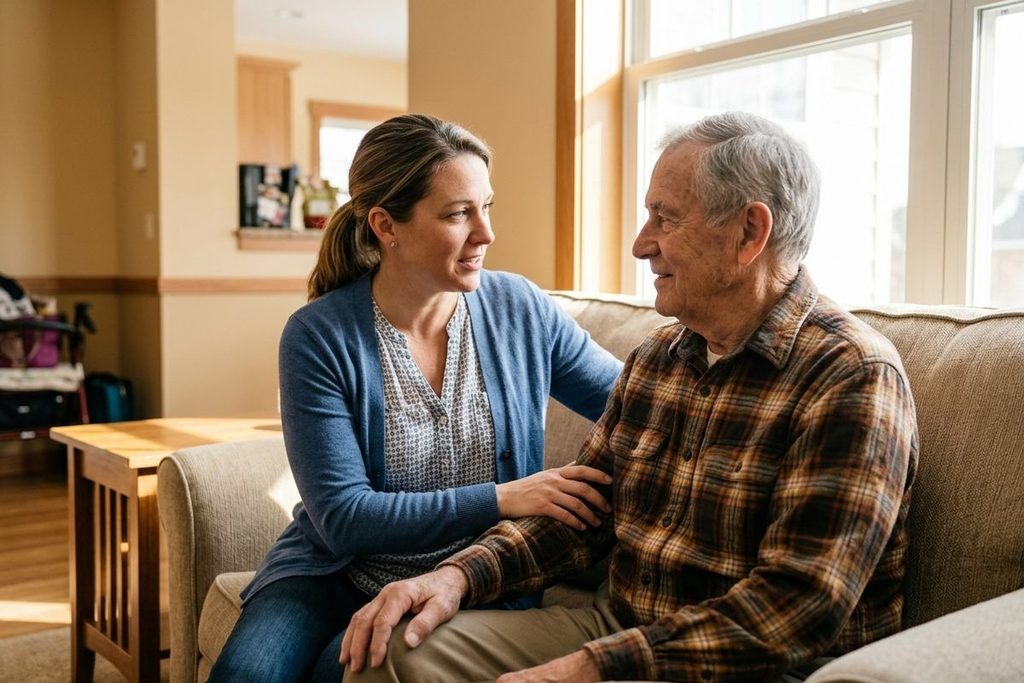
Don’t underestimate the power of small observations. Keep simple notes about what you notice. It doesn’t have to be long, just a line or two a day about dressing, meals, or sleep. When you meet with a care team, share with them what you’ve spotted. A plain view of daily life can fill in gaps no appointment can cover.
Touring communities early also gives you ample time to find the one that feels right for everyone. At Frontida Assisted Living of Kimberly, we’re always glad to talk to families. Maybe you have questions about assisted living, memory care, or the help that your loved one can get.
No matter which stage your loved one is at, we’re here to offer a loving hand. Feel free to reach out to schedule a visit whenever you’re ready.